Morton Salt’s Net Worth: How an Iconic Brand Preserved Value Over a Century

Morton Salt’s net worth is the result of over 170 years of strategic growth, industrial necessity, and unwavering brand recognition. As one of the most familiar names in American households and businesses, Morton Salt has established itself not only as a staple product but also as a multi-billion-dollar enterprise.
From its iconic umbrella girl to its expansion into diverse industrial markets, Morton Salt’s success story is a model of how consistency, innovation, and smart ownership transitions can turn a basic commodity into an enduring corporate asset.
Legacy and Longevity – How Morton Became the Face of American Salt
Founded in the 1840s, Morton Salt began as a small salt distributor in Chicago. Over time, it grew into a dominant player in the American salt market. A key turning point in the company’s history came in 1911 when Morton introduced magnesium carbonate as an anti-caking agent in its table salt. This innovation allowed the salt to pour freely even in humid weather—a simple improvement that had a major impact on its appeal to consumers.
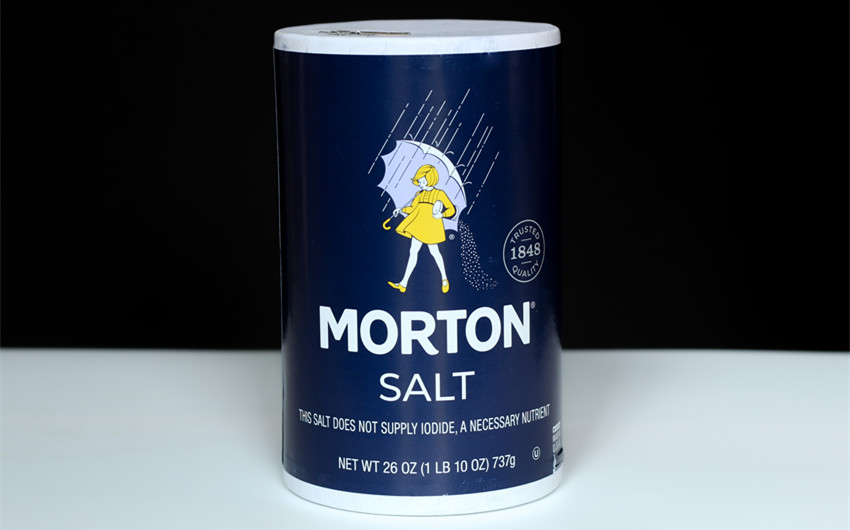
This technical advance gave rise to one of the most recognizable taglines in advertising history: “When it rains, it pours.” Accompanying the slogan was the famous Morton Salt Girl, first introduced in 1914, holding an umbrella while salt spills behind her. This logo and message positioned Morton not just as a salt provider, but as a household name that stood for reliability and consistency.
Over the decades, Morton became a staple in American kitchens. But its role wasn’t limited to food seasoning. The company expanded its product offerings to include salt used in water softening, snow and ice removal, agriculture, and food processing industries. That diversification played a key role in increasing its net worth, ensuring that the company didn’t rely solely on one sector for revenue.
The staying power of the Morton brand can be attributed to its balance between innovation and familiarity. Consumers know what to expect when they buy a Morton product, and that trust has led to sustained loyalty across generations. In the competitive consumer goods market, such loyalty translates to stable revenue and strong market presence—two key components in determining overall company value.
Corporate Ownership and Acquisitions – A History of High-Stakes Deals
Morton Salt’s history of ownership transitions tells the story of how its financial value evolved over time. In 1919, it became a publicly traded company, marking its growth into a major industrial force. Over the years, it was acquired by larger chemical and mining companies looking to tap into its robust distribution channels and consistent cash flow.
One of the major corporate shifts occurred in 1982 when Morton was acquired by Rohm and Haas Company, a prominent chemical manufacturer. This deal further integrated Morton into a broader industrial portfolio and allowed it to leverage new technologies and markets. The acquisition reflected Morton’s growing worth beyond consumer salt, particularly in chemical applications and bulk supply.
In 2009, the German company K+S Group purchased Morton Salt for approximately $1.7 billion, further validating its international value. The acquisition marked Morton’s formal entrance into the global marketplace, positioning it as a key player not just in the U.S., but also in international salt production and distribution.
A decade later, in 2020, Morton Salt was sold again—this time to Kissner Group Holdings, a company backed by Stone Canyon Industries and Mark Demetree. The deal was valued at around $3.2 billion and included other salt-related businesses, but Morton Salt remained the crown jewel of the acquisition. The price tag not only demonstrated the brand’s financial strength but also highlighted investor confidence in its future profitability and scalability.
Each acquisition brought Morton new resources, markets, and infrastructure, but also underscored how valuable the company had become in terms of brand equity, customer loyalty, and diversified product offerings. These deals contribute heavily to Morton Salt’s net worth calculation in the current decade.
Revenue Streams – Industrial vs Consumer Salt Products
What makes Morton Salt unique in the consumer product landscape is its dual focus on retail and industrial clients. On the consumer side, Morton dominates the U.S. table salt market. Its blue packaging is instantly recognizable on grocery store shelves, and it maintains strong shelf space across major retailers including Walmart, Target, and Kroger.
However, a significant portion of Morton Salt’s revenue comes from non-retail sectors. The company supplies de-icing salt to municipalities and private contractors responsible for clearing roads and highways during the winter. These contracts are often long-term and high-volume, providing consistent revenue regardless of consumer market fluctuations.
Morton also serves agricultural clients with salt products used in animal feed and food processing companies that require industrial-grade salt for preservation and flavoring. Water softening salt is another profitable segment, with widespread residential and commercial demand.
These different revenue channels provide insulation against economic downturns. When consumer spending tightens, industrial contracts often remain in place. When snowfall increases, demand for de-icing salt spikes. This balance between B2C and B2B allows Morton Salt to maintain a relatively predictable income stream year after year.
While exact revenue numbers are not always made public, analysts estimate that Morton Salt generates annual revenues of around $1 billion, making it one of the most profitable salt producers in North America.
Brand Equity and Global Reach
Morton Salt’s brand equity is one of its most valuable, if intangible, assets. The Morton Salt Girl, now over 100 years old, is one of the longest-running product icons in American marketing history. That kind of recognizability doesn’t just help with sales—it influences brand licensing, advertising leverage, and shelf prioritization in retail environments.
Over the years, Morton has expanded its global footprint through distribution partnerships and exports. While its primary operations remain in the United States, the brand is known and respected in international markets where quality salt products are in demand. Global expansion has included sales into Canada, parts of Latin America, and selective European markets.
Brand loyalty, particularly in staple categories like food and household goods, plays a significant role in company valuation. Studies have shown that consumers are willing to pay more for brands they trust, and that pricing power directly impacts profit margins.
Morton has also invested in sustainability and transparency, aligning with modern consumer values. From eco-friendly packaging to sourcing transparency, the company has continued to evolve its image while staying true to its core product identity. This has helped it maintain relevance and defend its market share against generic and private-label competitors.
What Is Morton Salt’s Net Worth in 2025?
As of 2025, Morton Salt’s net worth is estimated to be between $3 billion and $4 billion, based on recent acquisitions, historical valuations, and annual revenue trends. This estimate considers both tangible assets—such as production facilities, equipment, and inventory—and intangible assets like brand equity, customer loyalty, and intellectual property.
Here’s a summary of what contributes to Morton Salt’s current valuation:
-
Consumer Market Share: Dominance in U.S. retail salt products with brand recognition
-
Industrial Contracts: Steady income from municipal, agricultural, and commercial sectors
-
Global Operations: Expansion into international markets adds scalability
-
Brand Value: One of the most iconic and trusted logos in American retail
-
Asset Holdings: Production plants, mines, and warehouses across North America
-
Ownership Backing: Strong private equity support from Stone Canyon and Kissner Group
Because it operates in a commodity market, Morton’s value is also influenced by supply chain efficiency, global salt demand, and seasonal variations. Nonetheless, its diversified product base and institutional partnerships position it as a recession-resilient business.